

Back pain is one of the most common reasons people seek help for their bodies, yet it is also one of the most misunderstood. It may appear as a dull ache after a long day, stiffness when you wake up, or recurring discomfort that never seems to fully go away. For many of us living in Singapore, busy work schedules and active lifestyles often take priority, and back pain becomes something we learn to tolerate rather than understand.
The truth is, back pain is rarely random. In most cases, it is your body’s way of signalling that something in your daily habits, posture, movement patterns, or recovery routine needs attention.
In this article, we explore why back pain happens, the everyday habits that often contribute to it, how to recognise when it should not be ignored, and why a more holistic perspective is often needed for lasting relief.
Why Back Pain Is So Common Today

Back pain has become increasingly common in our lives, not because our bodies are weaker, but because our lifestyles have changed faster than our bodies can adapt.
Many of us spend hours sitting at desks, commuting, or looking down at screens. Movement tends to be repetitive and limited, while recovery is often rushed or neglected. Over time, this creates continuous strain on the muscles, joints, and connective tissues that support the spine.
Common contributors to back pain today include:
- Prolonged sitting with little variation in posture
- Poor ergonomic setup at work or home
- Weak core and stabilising muscles
- Repetitive movements or overuse during exercise
- Poor lifting habits or sudden twisting motions
- Inadequate rest and recovery between activities
These factors may not cause pain immediately. Instead, stress accumulates quietly in the body until discomfort becomes noticeable and often when the body has already been compensating for some time.
Back Pain Is Not Always an Injury
When back pain appears, many people assume something is “damaged” or that they have injured themselves. While injuries do happen, a large number of back pain cases are linked to functional strain rather than structural damage.
Functional back pain often means:
- Certain muscles are overworking to support posture
- Other muscles are underactive or weak
- The body is compensating for an imbalance elsewhere
- Movement patterns are inefficient or restricted
In these situations, pain may come and go, improve temporarily with rest, or shift locations over time. Because there is no obvious injury, it is easy to dismiss early signs of the condition until the discomfort becomes recurring or more intense.
Understanding this difference is important, as functional issues usually require a different approach than simply resting or waiting for pain to disappear.
Common Daily Habits That Contribute to Back Pain

Back pain often develops not from a single event, but from repeated daily habits that place stress on the body.
1. Sitting for Long Periods
Sitting for extended hours places constant pressure on the lower back, especially when posture is unsupported. Over time, reduced movement and circulation can lead to stiffness, muscle tension, and discomfort.
2. Poor Movement Patterns
Everyday actions such as bending, lifting, or twisting may strain the back when done repeatedly or without proper coordination. Even light loads can create stress when movement patterns are inefficient.
3. Stress and Tension
Emotional stress does not stay only in the mind. It often manifests physically as muscle tension, particularly around the back, shoulders, and neck. Prolonged tension can restrict movement and contribute to persistent discomfort.
4. Inconsistent Physical Activity
Both inactivity and sudden overexertion can lead to back pain. When the body lacks gradual conditioning, it becomes less resilient to everyday demands, increasing the risk of strain.
These habits are common, which is why back pain affects people across different ages and activity levels.
Signs Your Back Pain Should Not Be Ignored
Occasional soreness after activity may resolve on its own. However, certain signs suggest that back pain may need closer attention.
You may want to take action if,
- Pain returns repeatedly after rest
- Stiffness is worse after inactivity or in the morning
- Discomfort spreads to the hips, buttocks, or legs
- Movement feels restricted or guarded
- Pain interferes with daily activities or sleep
These signs often indicate that the underlying cause has not been addressed and that the body is continuing to compensate.
Looking at Back Pain from a Whole-Body Perspective
From a TCM perspective, back pain is rarely isolated to one area alone. Posture, muscle balance, Qi and blood circulation, and daily habits all interact to influence how the back functions.
Rather than focusing only on where the pain is felt, a whole-body approach looks at:
- How the body moves as a system
- Areas of tension or restriction
- Muscle coordination and support
- Lifestyle factors that affect recovery
This perspective helps explain why temporary relief methods may ease discomfort but fail to prevent pain from returning.
What Helps Back Pain in the Long Run
Long-term improvement often comes from understanding and addressing the root causes of back pain, rather than chasing short-term relief.
This may involve,
- Improving movement quality and posture
- Supporting muscle balance and flexibility
- Managing stress and physical tension
- Allowing sufficient recovery between activities
- Receiving care that is tailored to the individual
Consistency is key. Small, gradual adjustments made over time are often more effective than drastic changes.

When to Consider a Professional Assessment
If back pain is affecting your daily life, keeps returning despite rest, or feels progressively worse, a professional assessment can provide much-needed clarity for you, especially before the condition becomes more complex or chronic.
From a TCM perspective, early assessment is important because many back pain issues begin as functional imbalances rather than structural damage. When addressed early, TCM treatments can help prevent the condition from becoming more complex or chronic.
Early TCM assessment allows practitioners to identify patterns that may not be obvious based on symptoms alone, such as muscular tension, weakness, poor circulation, or compensatory movement habits. Addressing these patterns early helps reduce prolonged strain on the body and supports more sustainable recovery.
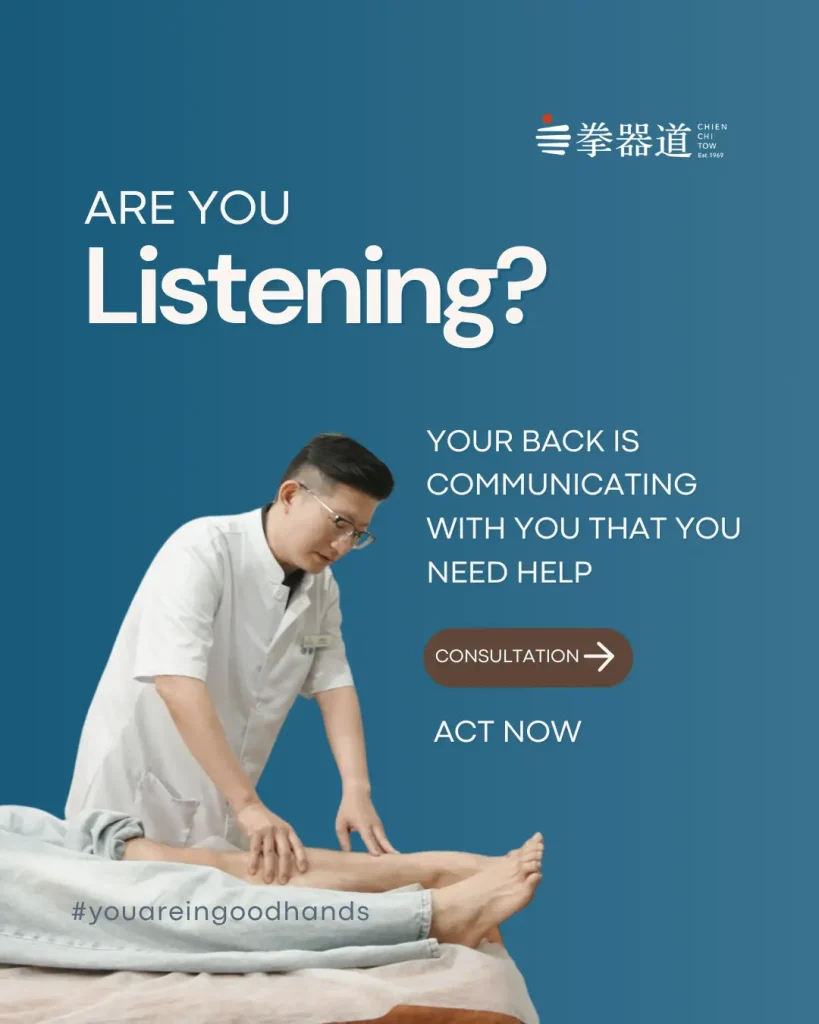
One commonly used approach is Tuina, a form of therapeutic TCM massage. Tuina can help provide more immediate relief from soreness and stiffness by:
- Releasing muscle tension and tightness
- Improving circulation to affected and related areas
- Supporting joint mobility and functional movement
It is important to note that in TCM practice, the area of soreness is not always the root cause of the problem. Depending on an individual’s posture, movement patterns, and daily habits, the primary issue may originate from connected or compensating areas, such as the hips, legs, shoulders, or spine. These relationships are typically identified through a professional TCM assessment rather than based on symptoms alone.
An assessment also helps to:
- Understand why pain is recurring, shifting, or spreading
- Identify contributing lifestyle habits and movement patterns
- Determine appropriate, personalised next steps for care
When You Should Seek Further Medical Examination
While many cases of back pain are functional and respond well to conservative care, there are situations where further medical evaluation is important. You should consult a medical doctor promptly if back pain is accompanied by:
- Severe or worsening pain following a fall, accident, or injury
- Persistent numbness, tingling, or weakness in the legs
- Loss of bladder or bowel control
- Unexplained weight loss or persistent fever
- Pain that does not improve at all with rest or continues to worsen
These signs may indicate conditions that require imaging, medical investigation, or urgent care.
Rather than relying on guesswork, seeking the right form of assessment at the right time allows you to make informed and responsible decisions about your health.
Moving Forward with Confidence
Back pain does not have to be something you simply live with. When care begins with understanding, not based on assumptions, it becomes possible to address discomfort more effectively and prevent it from returning.